February is already in full swing, and while we’re busy embracing the new year, we thought it would be nice to pause for a moment. Let’s take a quick look back at what we’ve been up to at Wonderland over the past year: as it turns out, we’ve been doing more than just surviving the winter.
We’ll also give you a sneak peek at what’s on the horizon for the coming months, so you can mark your calendars and join us for the adventures ahead. Click here to see what’s coming up in 2026!
At the start of the year, Wonderland launched its new website, accompanied by an online library for access to our publications, films, articles, and research outputs.
The library is continuously growing to document and disseminate the outcomes of our projects, research, and collaborations – so visit regularly for more content!
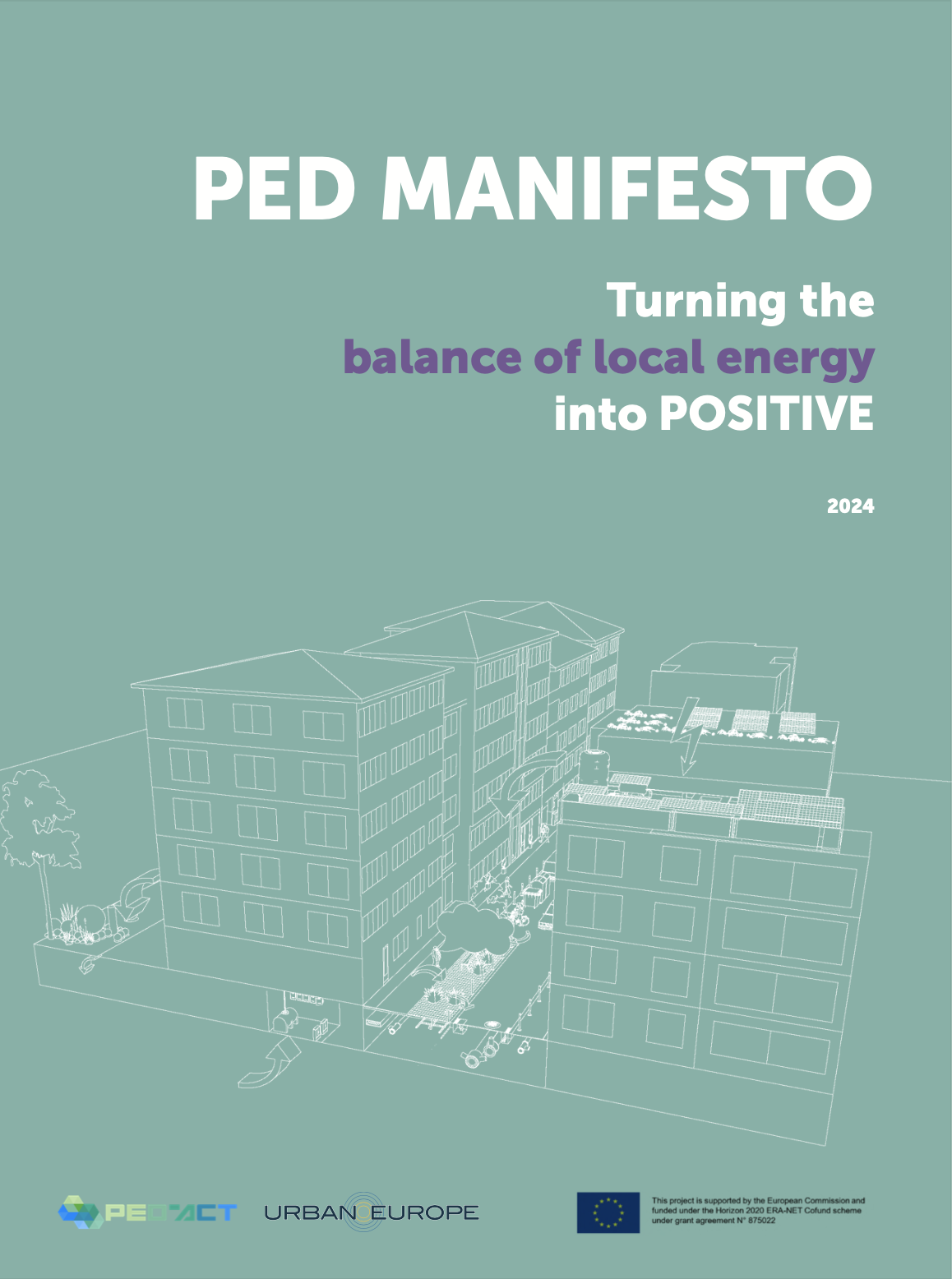
Wonderland members contributed to all three volumes of Placemaking in Practice and published the chapter Youngsters’ Right to the City. We also presented research at international conferences and continued to develop the PED Manifesto as a living, collaborative framework. The manifesto is now available in seven languages, supporting its use across different local and international contexts.
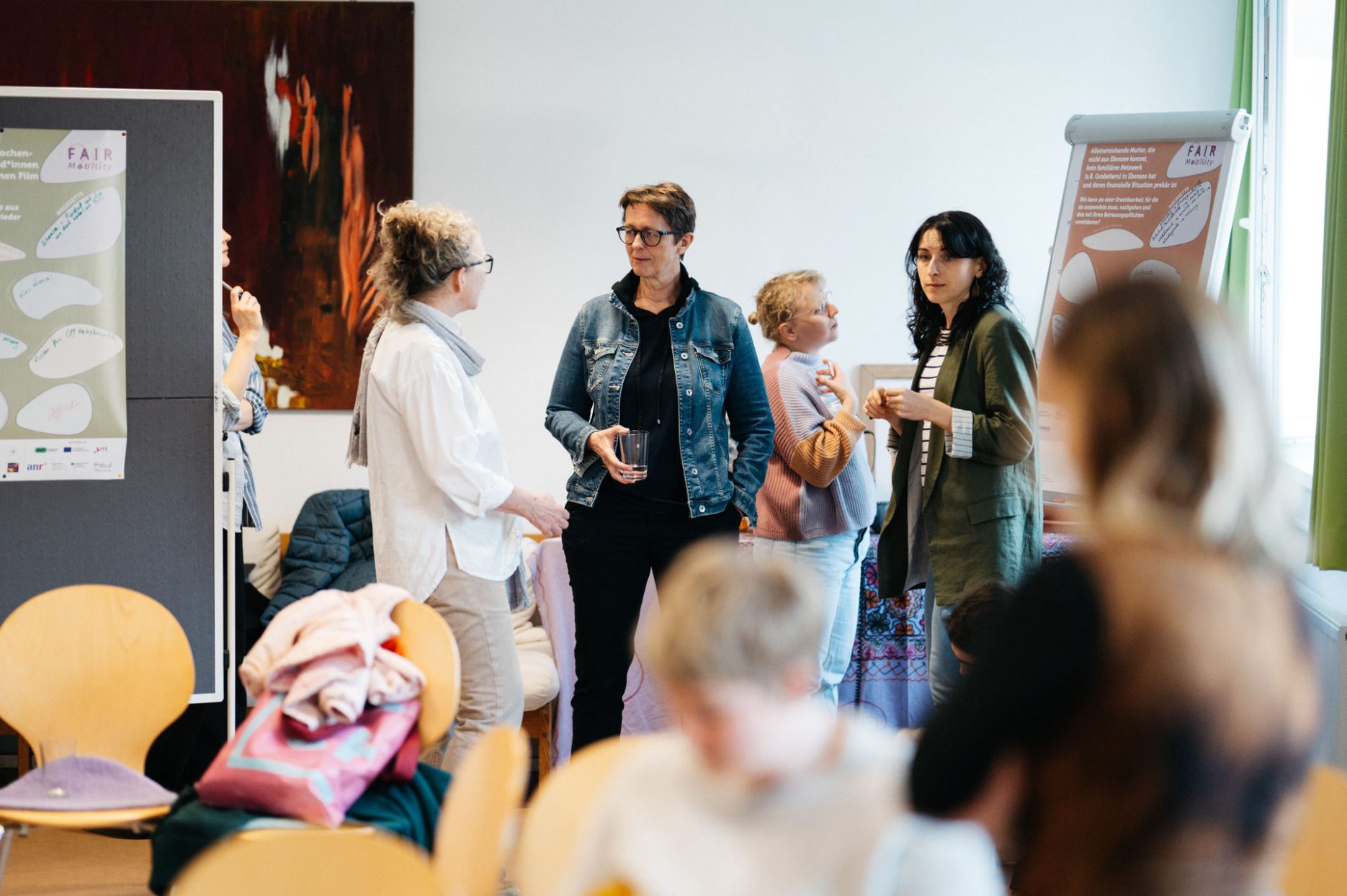
As part of the EU project Fair Mobility, we co-organised a local workshop in Ebensee focusing on mobility challenges faced by women and gender minorities. Through discussions, mapping exercises, and a collective walk through public space, participants reflected on accessibility, everyday barriers, and future possibilities for more inclusive mobility.
Alongside the workshops, we produced a series of short films documenting mobility challenges and participatory processes in Ebensee (Austria) and Creil (France). The films focus on inclusive mobility, accessibility, and the perspectives of women and gender minorities, using storytelling as a tool to support awareness, dialogue, and change.
Throughout the year, we actively contributed to the POSEIDON project, including partner meetings in Marseille, Urban Living Labs in Antalya, and several international workshops. We also presented POSEIDON-related research at CEES 2025, highlighting participatory governance, urban resilience, and inclusive Positive Energy Districts.
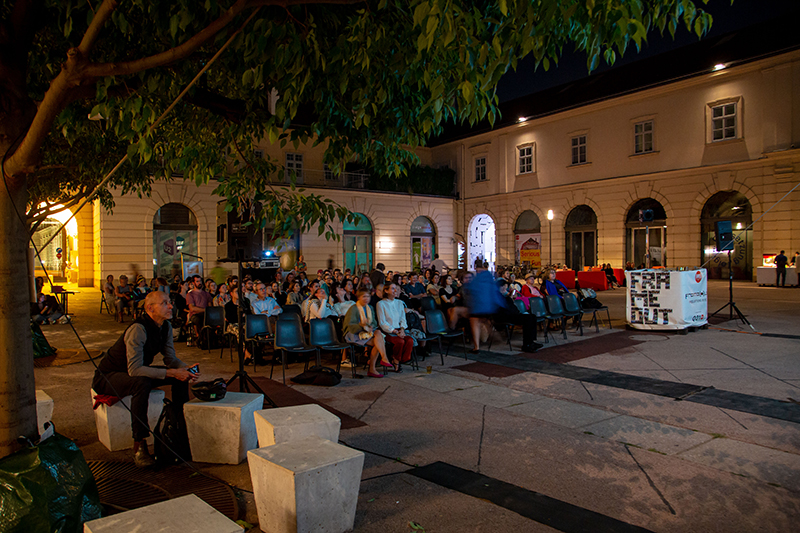
In 2025, two Movies in Wonderland productions were screened at the Architektur.Film.Sommer at Architekturzentrum Wien: BürgerinnenKRAFTwerk – the story of an energy community (AT 2024, R: Yilmaz Vurucu, Bahanur Nasya), portraying a citizen-led initiative for local renewable energy production, and Blickpunkte Portrait Almgrün (AT 2024, R: Arian Lehner & Dominik Kastner / Mies.Magazin), focusing on solidarity-based agriculture and the protection of green spaces.
We were also present internationally. As part of the MIT Fall 2025 Architecture Lecture Series, Marlene Rutzendorfer from Movies in Wonderland curated and co-hosted the film evening On Care, Space, and Transformation.
Our collaboration with Mies.Magazin continued to travel: Beyond Eternity – Architecture Facing the Impermanence (Arian Lehner / Mies.Magazin) was screened internationally, including at the University of Applied Arts Vienna, and Kunst vs Krise (AT/FR 2025, Arian Lehner / Mies.Magazin) celebrated its world premiere at the Klimabiennale 2025.
Within the YEFECE project, we hosted a two-day workshop with Fantoplast, exploring circular economy approaches to plastic waste. Participants learned about recycling processes, material experimentation, and sustainable business models, combining theory with hands-on production.
At Klimacamp 2025, we hosted a workshop on community-led energy transition. Building on our work with the PED Manifesto, we shared tools, screened a documentary on the Austrian energy community Bürger*innenKRAFTwerk, and discussed how participation can shape fairer energy systems.
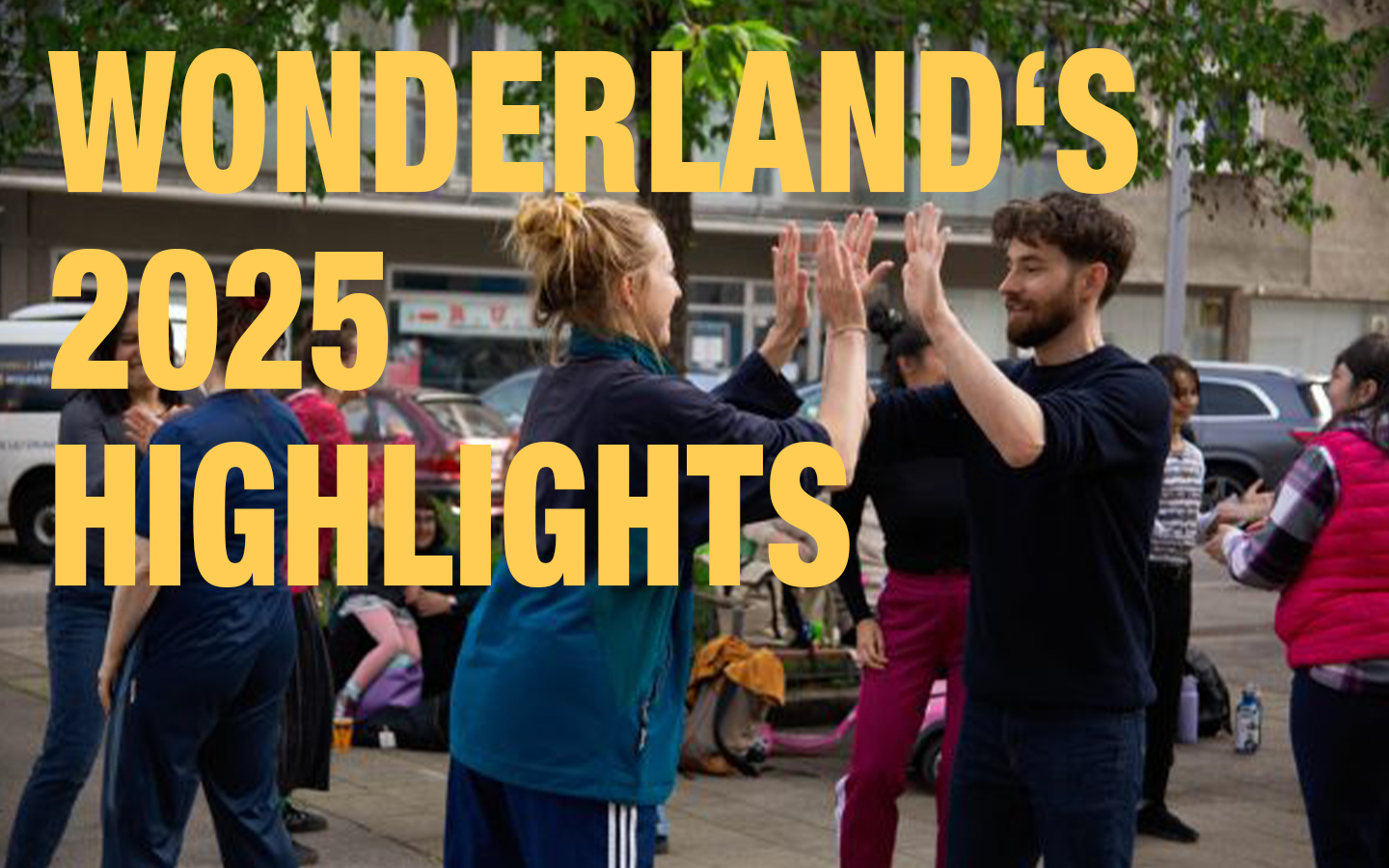
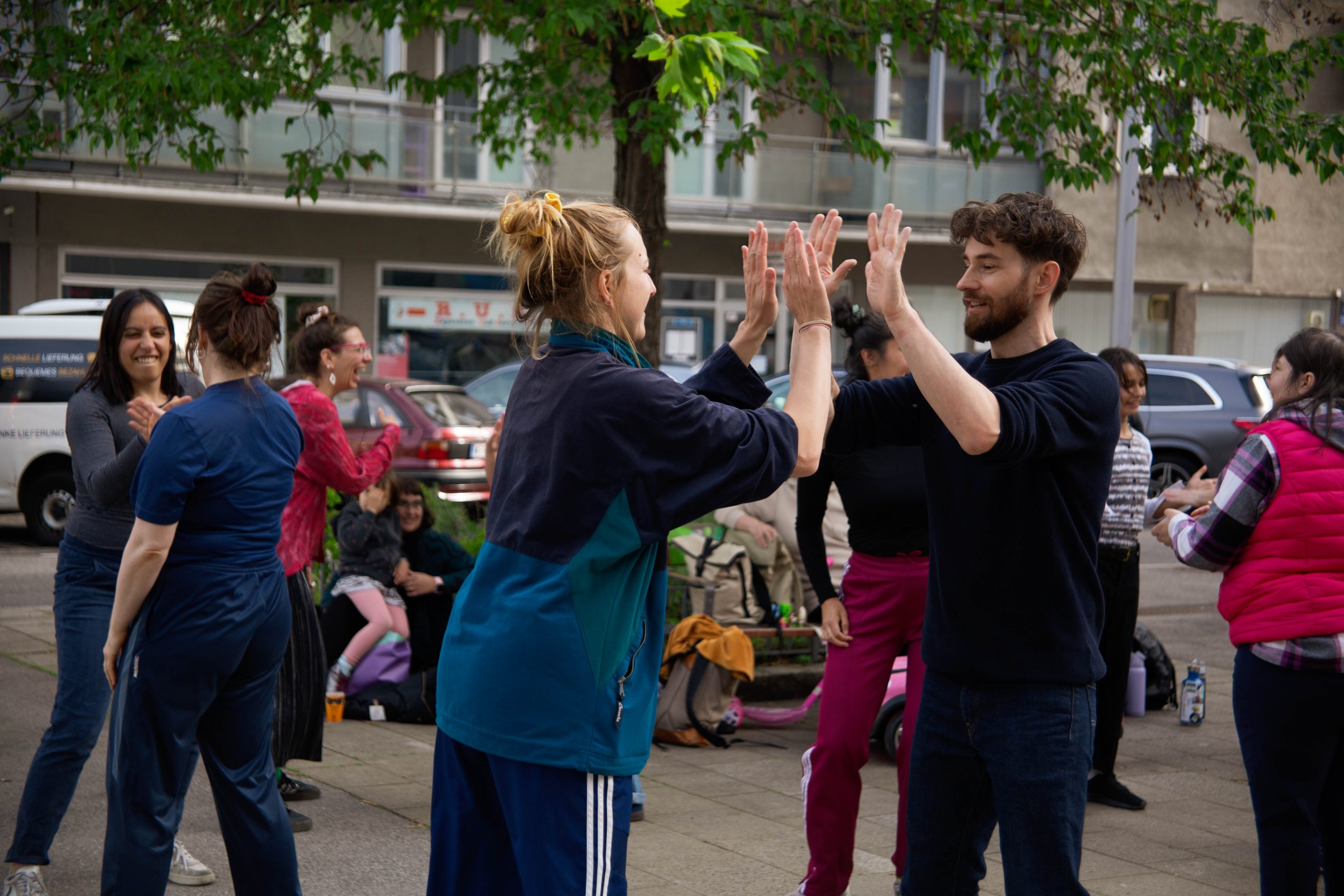
In Vienna, Space to Move! celebrated the end of the two-year EU Erasmus+ project CISCA. Through dance, movement, and sport workshops in public space, the event showcased how inclusive physical activity can activate neighborhoods and bring diverse communities together.
At the SSPCR Conference in Bolzano, we hosted the workshop Empowering Neighbourhoods: Co-designing the Energy Transition. The session focused on how Positive Energy Districts and energy communities can be developed as community-driven models, with an emphasis on co-creation, participation, and the fair distribution of social, environmental, and economic benefits.
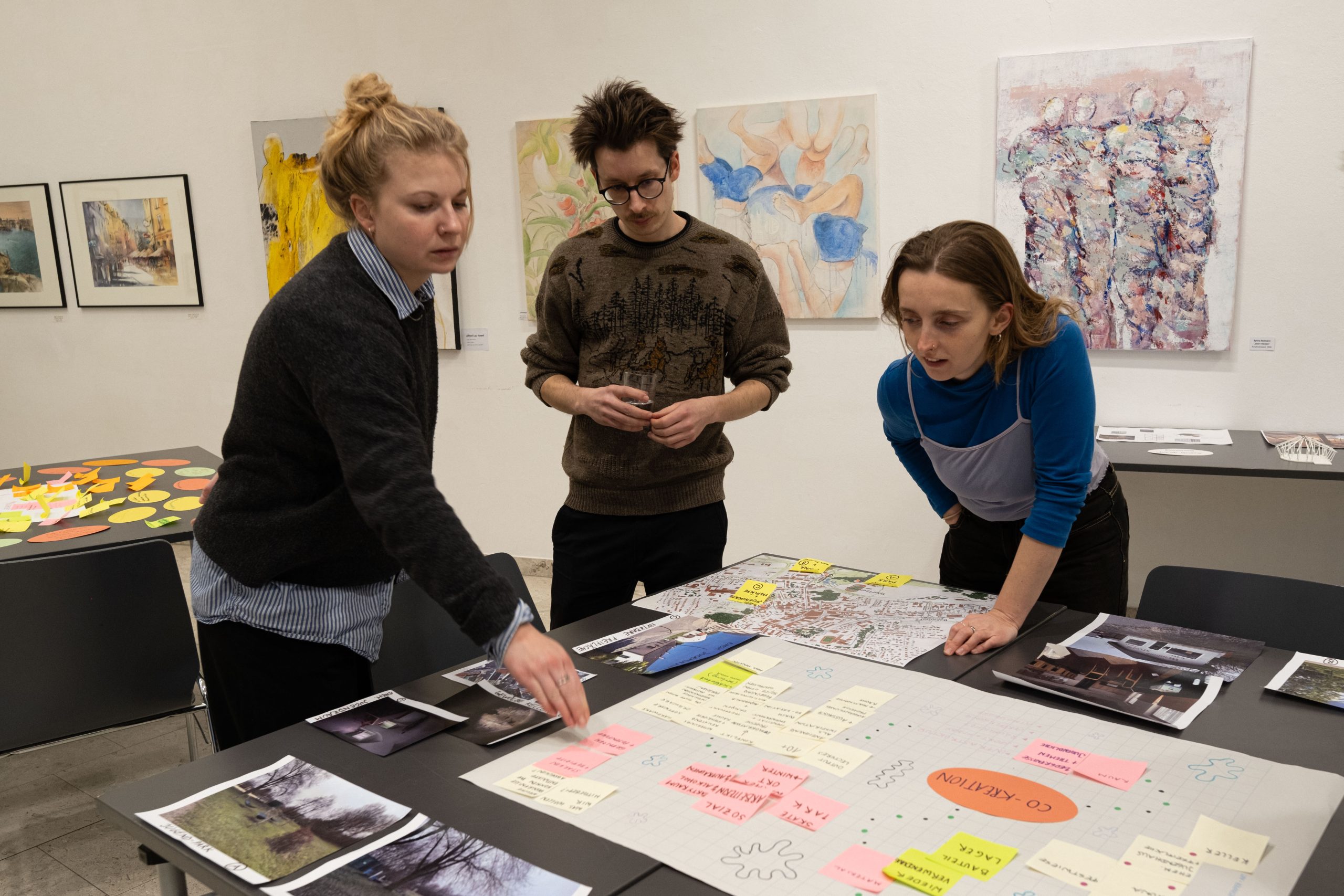
In December 2025, three selected teams came together in Mistelbach following the open call “Jugendräume für Mistelbach gestalten”. During a three-day Project Space workshop, participants worked with local youth and stakeholders to develop low-threshold concepts for youth spaces in rural contexts. The process concluded with a public presentation and exhibition of the results.